2026 Auburn Aviation Program Acceptance Rate: Your Backup Plan

Published by:
Matthew Bourguignon
Published on:
Updated on:
Read time:
8 min read
If you are searching for the Auburn aviation program acceptance rate, you are probably not just looking for a number. You are trying to answer a bigger question:
“If I do not get into the college flight program I wanted, is my pilot career delayed?”
The short answer is no. College aviation paths can be competitive and capped, but a waitlist does not have to mean a grounded year. If your goal is to fly, earn certificates, and keep moving toward a professional pilot career, you can start training close to Auburn while you sort out the college path.
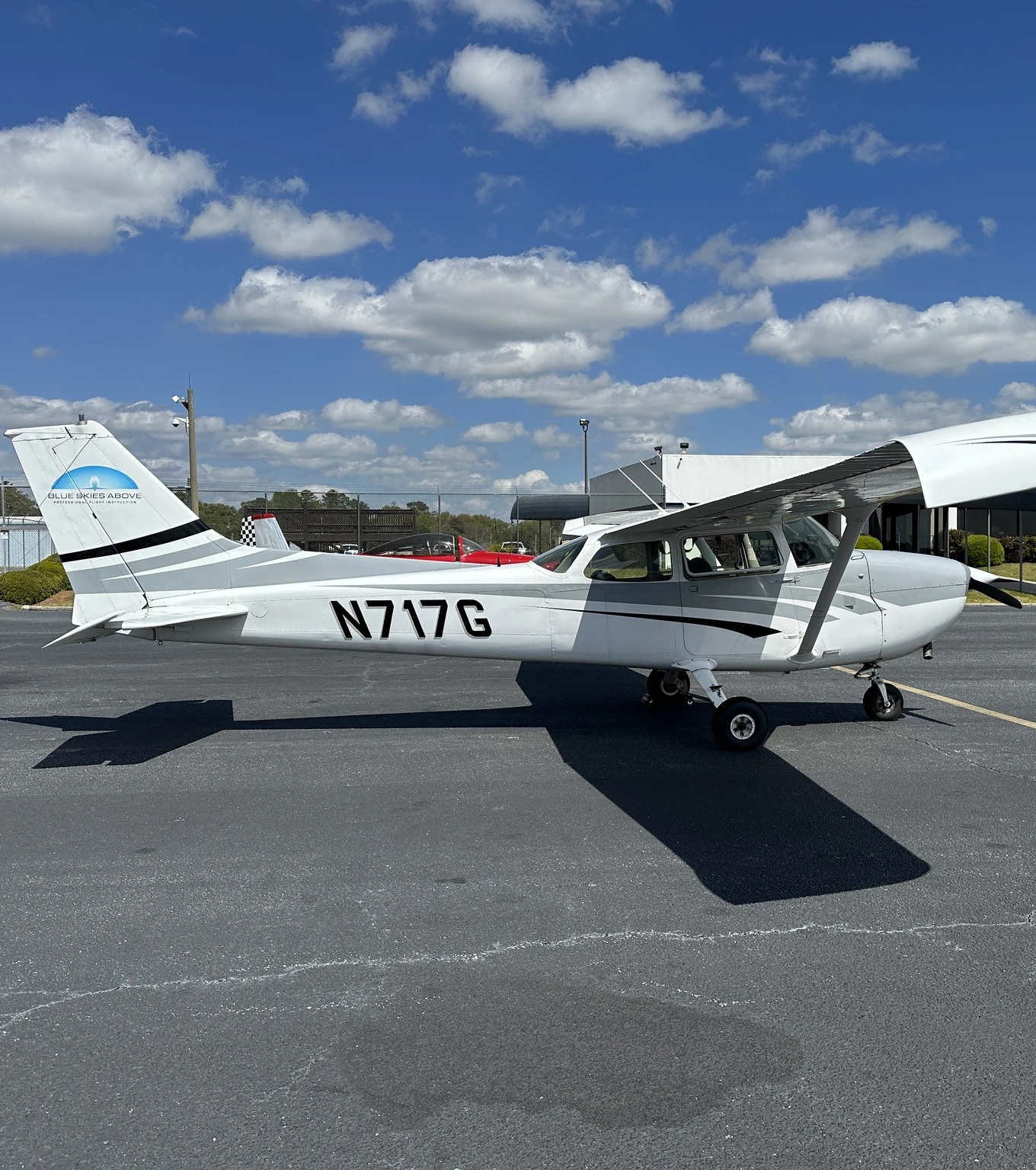
At Blue Skies Above, we help students near Auburn compare both paths clearly: the college aviation route and the local flight training route from Lanett Regional/Municipal Airport 7A3, about 30 minutes from Auburn.
Acceptance-Rate Searches Do Not Tell The Whole Story
Many students search for the Auburn flight school acceptance rate because they want a clear percentage. But acceptance-rate searches do not always show the real planning problem.
For college aviation programs, the real issue is usually limited flight seats, extra deadlines, and a second selection step.
That matters because you may be admitted to college but still not get the flight slot you wanted. You may also have to meet extra program requirements before you can move forward in the flight sequence.
That means the real issue is not a mystery percentage. The real issue is what you do next if the flight program is full, delayed, or not available on your timeline.
What Happens If You Are Waitlisted Or Not Admitted?
If you are admitted to a school but not admitted into its flight track, you may still have options. You might reapply later, choose a different major, or train outside the college system while you keep your long-term goal in view.
Some college flight tracks expect students to show real flight progress before they enter or transfer into the program. In many cases, the Private Pilot Certificate is the first credential that proves you are serious and ready for the next step.
So if you wait to start flying until after the decision, you may lose the exact thing that can make your next application stronger: real flight progress.
This is where a local plan can help. Instead of spending the year only watching deadlines, you can begin the Private Pilot Certificate path near Auburn and build the foundation many aviation paths expect.
Your Backup Plan Should Protect Your Timeline
A strong backup plan is not a panic move. It is a timeline move.
If your goal is a professional pilot career, the first steps are clear: Private Pilot, Instrument Rating, Commercial Pilot, then often instructor certificates or other hour-building work. A college aviation program can be one path through that journey. A local flight school can be another path, or it can help you make progress before you reapply.
At Blue Skies Above, your plan can start with:
- Private Pilot Certificate, so you build the foundation and work toward the certificate many aviation programs value.
- Instrument Rating, so you build stronger weather, cockpit, and navigation skills.
- Commercial Pilot Certificate, so you move toward paid flying eligibility under the right rules and qualifications.
- Certified Flight Instructor, so you can build skill and flight time by teaching after commercial training.
This does not mean every student should skip college. It means you do not have to let a capped college flight program decide when you first take the controls.
Part 61 Training Can Give You More Schedule Control
College flight programs usually run inside academic calendars, flight labs, blocks, and degree requirements. That structure can be the right fit for some students.
Part 61 training is different. Under Part 61, you still must meet FAA certificate standards, but training can offer more scheduling and pacing flexibility. That flexibility helps when you are trying to fly around classes, work, family, weather, or a reapplication plan.
At Blue Skies Above, the main benefit is simple: your training plan can be built around your actual life. You can talk with us about current availability, your target start date, and how often you can fly.
If you are comparing a college aviation path with local training, read our professional flight program alternative guide and the Auburn flight school page. Those pages help you compare the local path without guessing.
Cost Is Not Just Tuition. It Is Time, Housing, Fees, And Waiting
Cost is one of the biggest reasons students look for an Auburn aviation alternative. A four-year college path can include tuition, housing, program fees, flight fees, transportation, and extra time if you cannot enter the flight sequence when planned.
Blue Skies Above positions its zero-to-hero training path under $100K, but any flight training estimate needs context. Your final cost depends on aircraft time, instructor time, supplies, testing, examiner fees, weather, schedule consistency, and how quickly you reach proficiency.
That is why the better question is not just, “Which path is cheaper?” The better question is:
“Which path gives me the clearest progress for the money I am spending?”
For many students, a local training path can be dramatically less expensive than a four-year aviation degree path, especially when housing and college costs are part of the comparison. To plan responsibly, review financing options and contact us for a current estimate that separates aircraft, instruction, testing, and supplies.
College Credit And R-ATP: What To Know Before You Choose
This is the part where students need careful language.
Some college aviation programs may offer advanced credit for prior certificates, but credit is not something to guess about. It can depend on the school, the certificate, the timing, written evaluations, proficiency checks, and program rules.
Plan for the credit process before you choose where and when to finish the certificate.
Some college aviation programs also have FAA-authorized R-ATP pathways. That can matter if your goal is the airlines, but the requirements are program-specific. If R-ATP reduced-hour eligibility is central to your plan, confirm your exact path with the college before deciding where to complete each rating.
The key point is this: earning FAA pilot certificates outside a college flight program can still move your aviation life forward. It just needs to be planned with the right goal in mind.
How To Decide Between Waiting And Starting Now
Use this quick comparison before you lose a semester to indecision.
| If your situation is… | A practical next step |
|---|---|
| You are waitlisted for a college flight track | Start a local PPL plan so the year still produces flight progress |
| You missed the secondary application deadline | Train locally while you prepare for the next eligible application path |
| You were admitted in another major | Confirm how internal transfer requirements apply, then build your PPL plan |
| You are worried about total college cost | Compare tuition, housing, flight fees, supplies, and financing side by side |
| You want the airline path but not a flight degree | Map the FAA certificate path from PPL through commercial and CFI |
If you are unsure, start with the lowest-friction step: schedule a Discovery Flight or talk with us about your current timeline. You will make a better decision once you have seen the aircraft, the airport, and the schedule options in front of you.
FAQ: Auburn Aviation Acceptance Rate And Alternatives
What is the Auburn aviation program acceptance rate?
Acceptance-rate searches rarely tell the whole story. The better planning question is whether the flight track has limited seats, extra deadlines, required prior certificates, or a second selection step.
Are college flight programs hard to get into?
They can be. Many college aviation tracks are competitive because aircraft, instructors, flight labs, and program seats are limited. That is why a backup training plan matters.
What should I do if I am waitlisted?
If your goal is to fly, consider starting your Private Pilot Certificate locally while you keep track of the next application window. A waitlist season can still become a productive training season.
Can I become a pilot without a college flight program?
Yes. A college flight program can be a strong route, but it is not the only way to earn FAA certificates and ratings. You can train through a local flight school, continue through Instrument Rating and Commercial Pilot, and build toward professional flying. Airline hiring and R-ATP eligibility depend on the exact path and employer requirements.
Is Blue Skies Above connected to a college flight program?
No. Blue Skies Above is an independent flight school near Auburn, based at Lanett Regional/Municipal Airport 7A3. That independence is the point: you can train close to Auburn without waiting on a college flight block.
Can Blue Skies help me plan around Auburn deadlines?
Yes. We can help you look at your current timeline, your target start date, and your training pace. For college credit, transfer, and R-ATP questions, confirm the academic requirements directly with the college.
Keep Your Pilot Plan Moving
An aviation waitlist can feel like a stop sign. It does not have to be one.
If you want to fly, build a plan that protects your time. Start with the certificate that opens the next door. Compare cost with real assumptions. Keep college requirements in view, but do not let a capped program keep you out of the cockpit.
Blue Skies Above is about 30 minutes from Auburn at Lanett Regional/Municipal Airport 7A3. If you are ready to compare your options, contact Blue Skies Above and talk with us about your next training step.