Quiet Airport or Busy Metro Airport: Where Should You Learn to Fly Near Columbus and Atlanta in 2026?
Published by:
Matthew Bourguignon
Published on:
Updated on:
Read time:
8 min read
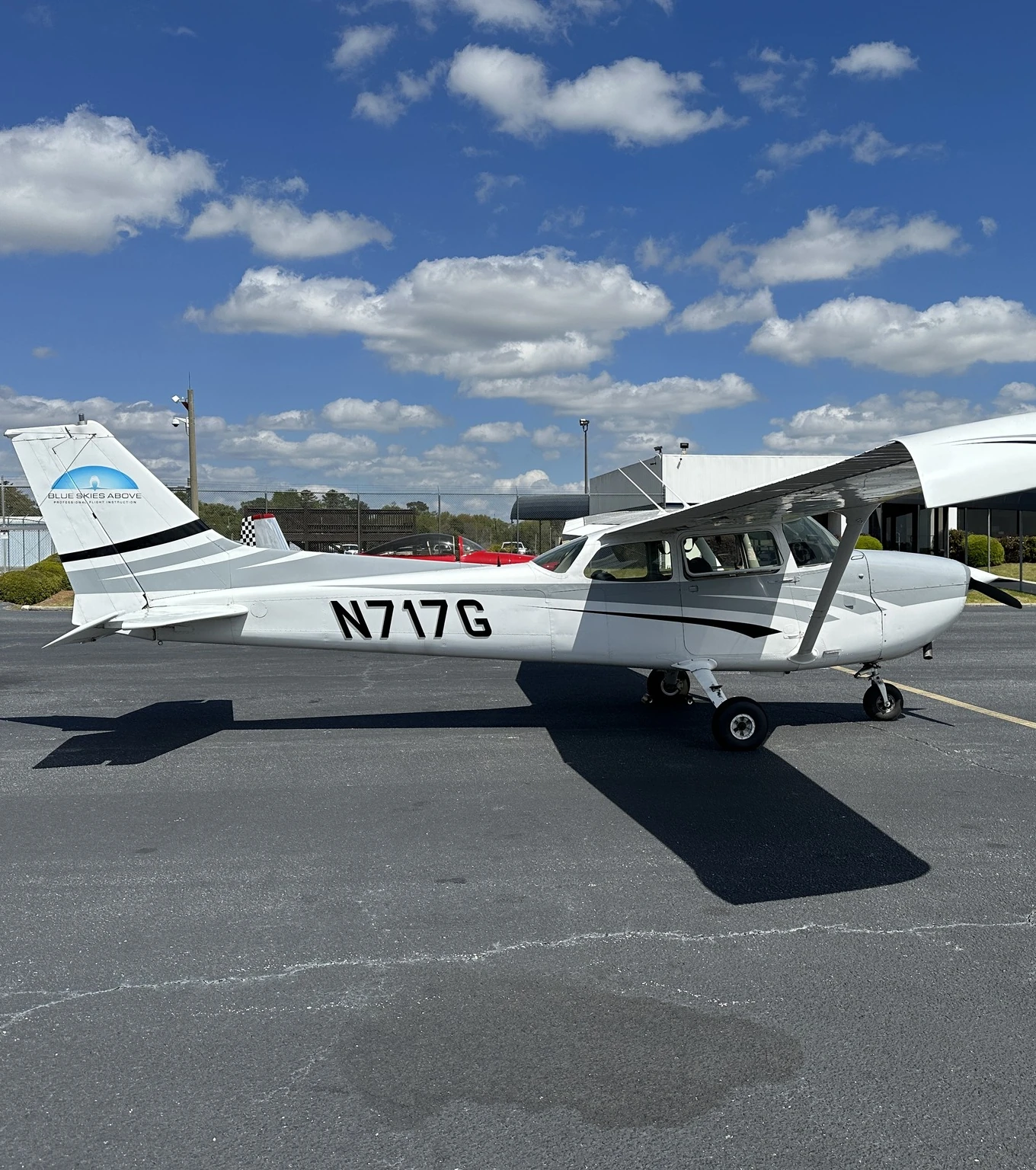
Your instructor hands you the microphone and nods. At a busy towered airport, the first radio call is the moment many new students freeze, with a controller waiting and other airplanes listening. At a quiet airport, the first call is to everyone in the area at once: “Lanett traffic, Cessna on the ramp, taxiing to the runway.”
If you are looking for pilot training near Columbus, GA or the south Atlanta suburbs, you are choosing between two kinds of airports. Some schools fly from busy towered airports. Others, like ours at Lanett Municipal Airport (7A3), fly from quiet fields with no control tower. Both teach real skills, and both can get you a certificate.
This guide compares them honestly, so you can choose based on how you want to train as well as how far you drive. For Columbus-specific details, our Columbus flight training page covers training from Columbus.
What changes when an airport has a control tower
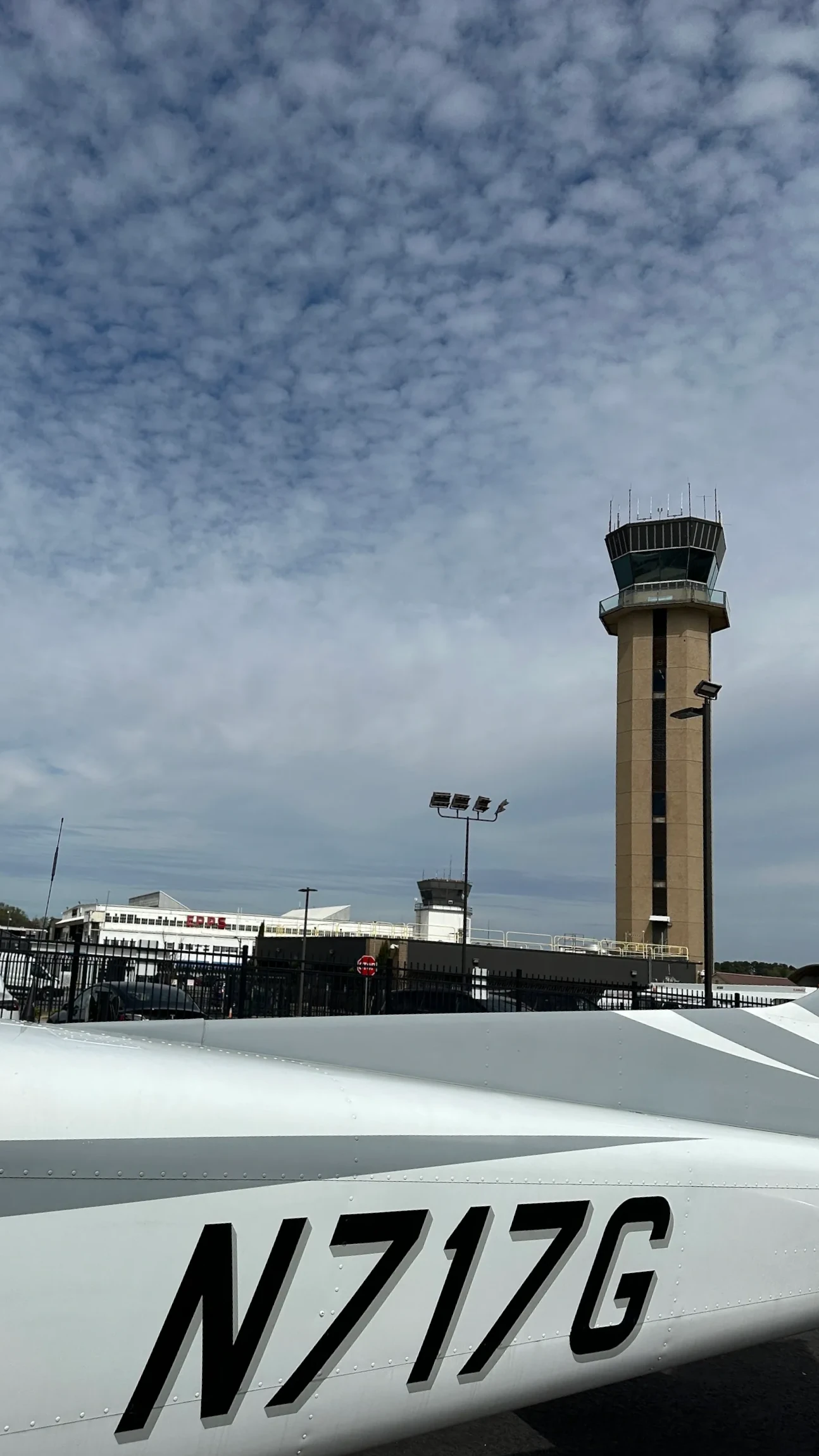
At a towered airport, an air traffic controller manages the runway and the airspace around it. You ask for permission to taxi, to take off, and to land, and you follow the controller’s instructions. It builds confidence on the radio fast, because you talk to air traffic control from your first lessons. The tradeoff is pace. Early on, you are learning to fly the airplane and to talk to a controller at the same time, and for some students that splits their attention while the basics are still new.
At a non-towered airport, there is no controller. Pilots use a shared radio frequency called the CTAF (common traffic advisory frequency) to announce where they are and what they are doing. You fly a published traffic pattern, scan for other aircraft, and follow right-of-way rules. A non-towered airport is not a free-for-all. The rules are clear, and you are the one responsible for following them.
Neither one is better for everyone. Towered airports build air traffic control confidence. Quiet airports build self-announcing, traffic scanning, and pattern habits. Our post on handling radio communication anxiety helps with radio skills at either kind of airport.
Why a quiet airport can put more of your lesson in the air
At a busy airport, part of every lesson can go to things that are not flying. Waiting for a takeoff slot, holding short of a busy runway, or extending a pattern for arriving traffic all take time, and that time is on the clock, with the airplane and your instructor both billing.
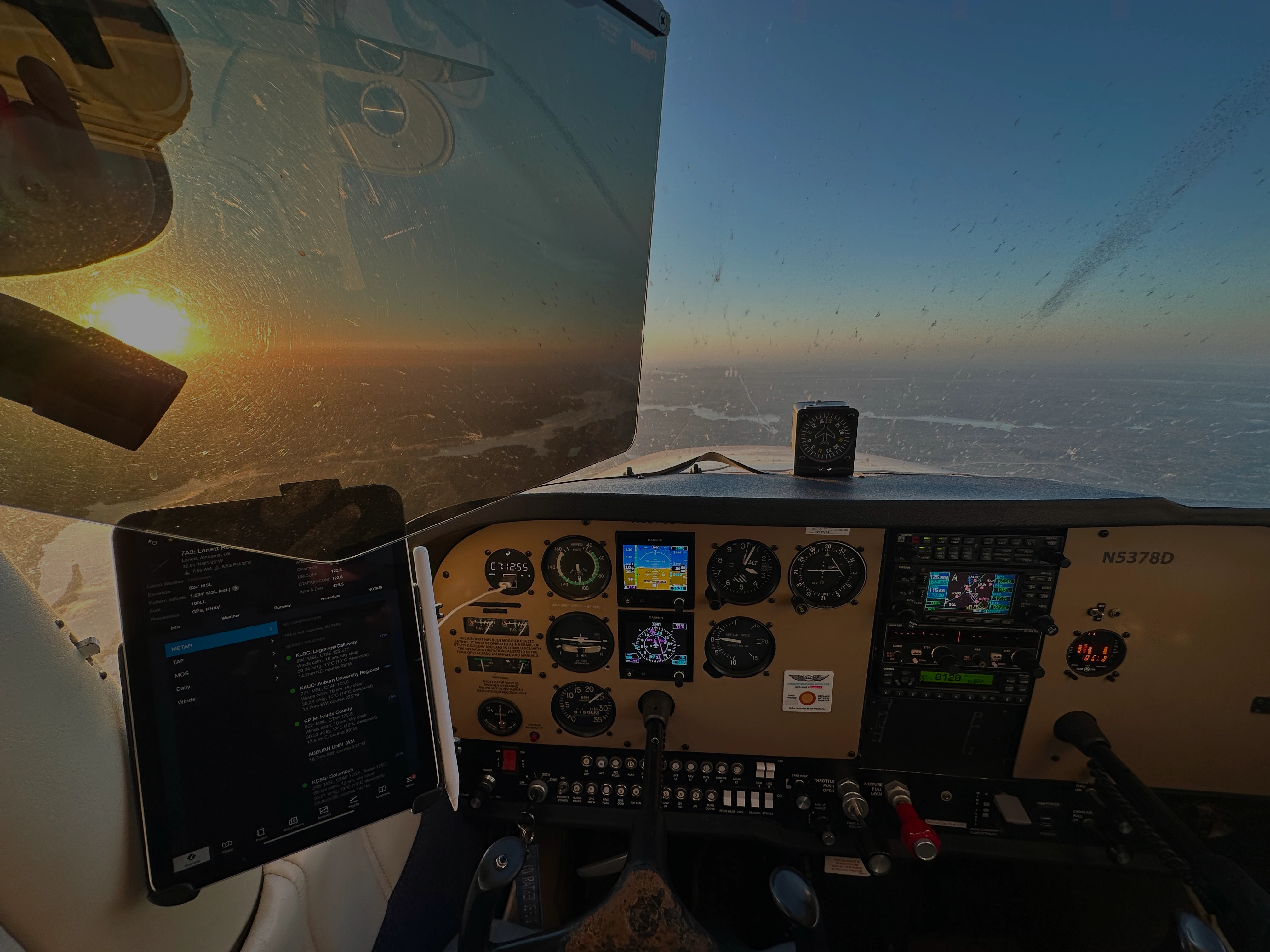
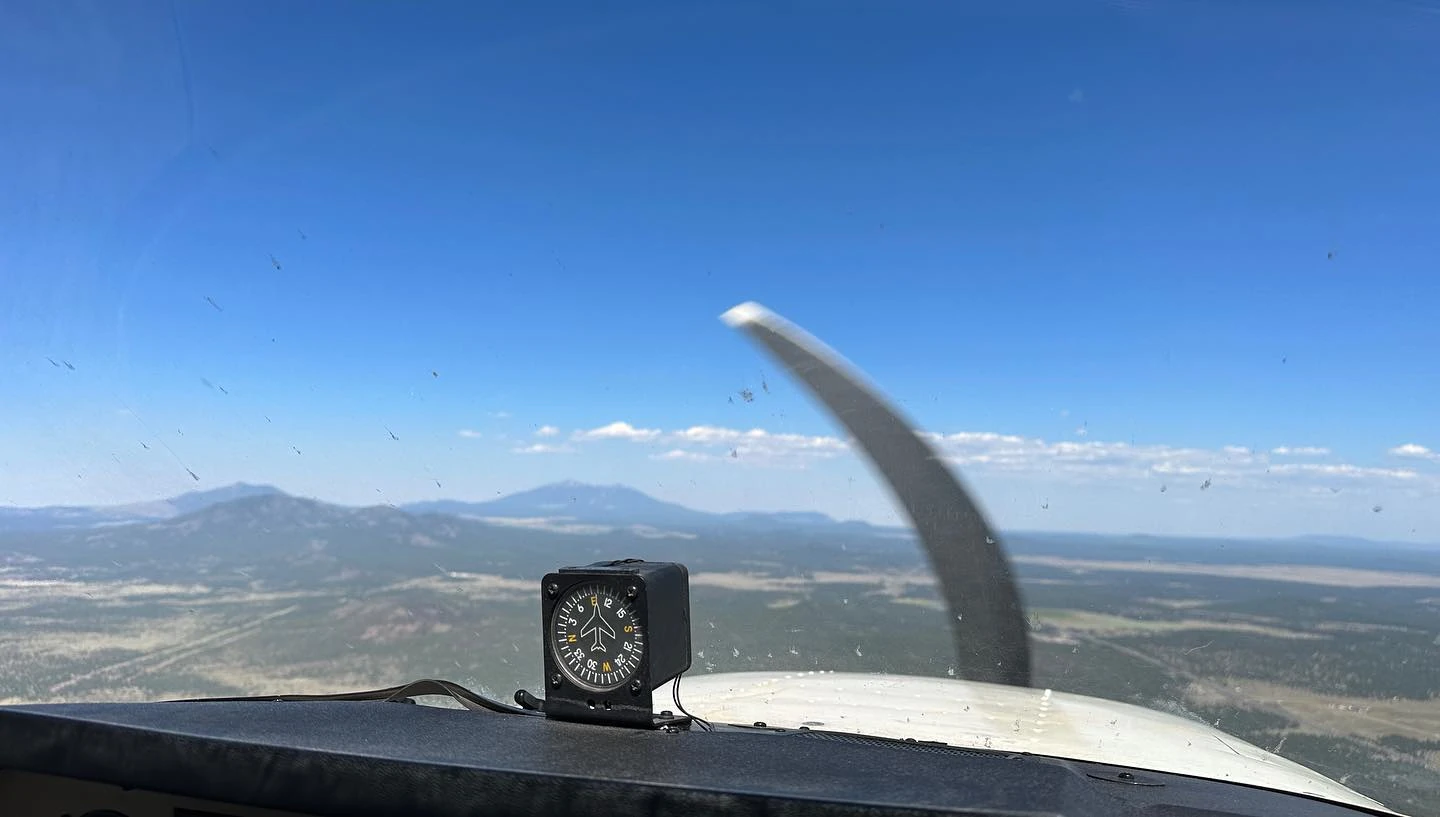
Lanett Municipal Airport has uncongested airspace, so more of your lesson goes to the maneuvers you came to learn: takeoffs, landings, stalls, and steep turns.
A quiet pattern also helps early landings. When you are learning to land, every trip around the pattern is a chance to practice the same steps again: the radio call, the turn to final, the flare. Fewer interruptions from other traffic means more repetitions in one lesson, and repetition is how landings start to feel natural. Busy airport conditions are one of the things that can push the total cost of training up, so a quieter field helps keep more of your budget in the air.
You pay for the time you fly here, with no minimum billing. Our post on why Lanett is a good place to start flight training explains more about how the airport helps students make progress.
You still train at towered airports along the way
Students at a quiet field still train at towered airports. For a Part 61 private pilot certificate, your training includes takeoffs and landings at an airport with an operating control tower. It is part of the FAA requirements, so every student practices it.
That gives you a useful mix. You build your basic skills where the pattern is quiet and you can focus, then you fly to a towered airport with your instructor to practice talking to air traffic control on purpose. You arrive at the tower with your flying already solid, so the radio is the only new thing to manage.
Our Private Pilot Certificate program builds that towered practice into your training plan. Your instructor picks the right moment, usually once your landings are steady, so the first trip to a towered field feels like a new skill on solid ground.
How the drive from Columbus and south Atlanta compares
Distance still matters, so here are the typical drives. Lanett is about an hour from Columbus and about 60 minutes down I-85 from Newnan and Peachtree City, depending on where you start and traffic.
| Starting point | Typical drive to Lanett (7A3) | Local page |
|---|---|---|
| Columbus, GA | About an hour | Columbus flight training |
| Newnan, GA | About 60 minutes | Newnan flight training |
| Peachtree City, GA | About 60 minutes | Peachtree City flight training |
| Auburn, AL | About 30 minutes | Auburn flight training |
An hour each way works best with a plan. Many students train in weekend blocks. We fly 7 days a week, and right now our weekend schedule has open slots. Our guide to weekend flight training shows how a Saturday and Sunday plan fits together, and our post on drive times to Lanett covers more towns.
Which airport fits the way you want to train
Use this as a quick guide to your decision before you book a lesson.
| If you want… | A quiet airport like Lanett | A busy towered airport |
|---|---|---|
| More of each lesson spent flying | Strong fit | Depends on traffic |
| Radio practice with a controller from day one | Planned trips to towered fields | Strong fit |
| A calm place to learn landings | Strong fit | Busier pattern |
| The shortest possible drive | Depends on where you live | Depends on where you live |
Choose a quiet airport if you want to focus on flying skills first and keep your lesson time in the air. Choose a busy towered airport if being on the radio with a controller from your very first lesson matters more to you than the extra time on the ground. Either way, you will learn both in the end.
Many students find the mix works best. They build their basic skills where the pattern is quiet, then add towered-airport trips with their instructor once they are comfortable in the airplane. That order lets you learn one hard thing at a time, and your instructor can plan the towered trips around your progress. If you are not sure which fits you, a Discovery Flight and a conversation with an instructor will make it clear quickly.
If cost is part of the decision, financing is available to qualified applicants through our lending partners. You can explore your financing options before you choose.
Airport Choice FAQ
Is it harder to learn at an airport without a tower?
No. You learn to announce your position and scan for traffic, which are habits every pilot uses. Your instructor teaches the procedures from the first lesson.
Will I learn to talk to air traffic control at Lanett?
Yes. Your private pilot training includes takeoffs and landings at a towered airport, so you practice talking to controllers with your instructor.
How far is Lanett from Columbus, Georgia?
About an hour, depending on where you start and traffic. See our Columbus flight training page.
Which airport is better if I want a flying career?
Both can lead to a career. What matters most is steady progress through your certificates and ratings. Students on a career path still practice at towered airports, and our training programs show the full path from private pilot to flight instructor.
Can I train on weekends if I drive from Atlanta’s south suburbs?
Yes. We fly 7 days a week, and weekend blocks make an hour-long drive easier to repeat. Read our weekend flight training guide.
Fly the Quiet Pattern Before You Decide
The best way to compare airports is to fly from one. A Discovery Flight at Lanett puts you in the left seat with an instructor, in a quiet pattern where you can focus on the airplane.
Book your Discovery Flight and see what learning at a quiet airport feels like.