Private Pilot License: What to Expect in Your First 30 Days
Published by:
Matthew Bourguignon
Published on:
Updated on:
Read time:
8 min read
Beginning Private Pilot License (PPL) training is an exciting step, and for many students, the first 30 days are the most eye-opening. This initial phase lays the foundation for everything that follows, from confidence in the cockpit to long-term success as a pilot. At Blue Skies Above, we guide students through these early lessons with clarity, structure, and encouragement.
Bear in mind that this overview is intended to provide a general idea of what the first 30 days of Private Pilot License training may look like. Every student’s experience is unique, and actual progress can vary based on individual learning pace, weather, instructor availability, and, most importantly, the number of training sessions completed each week. Students who fly more frequently often progress more quickly, while those training on a more limited schedule may move through these early stages at a different pace.
Week 1: Orientation and Your First Flights
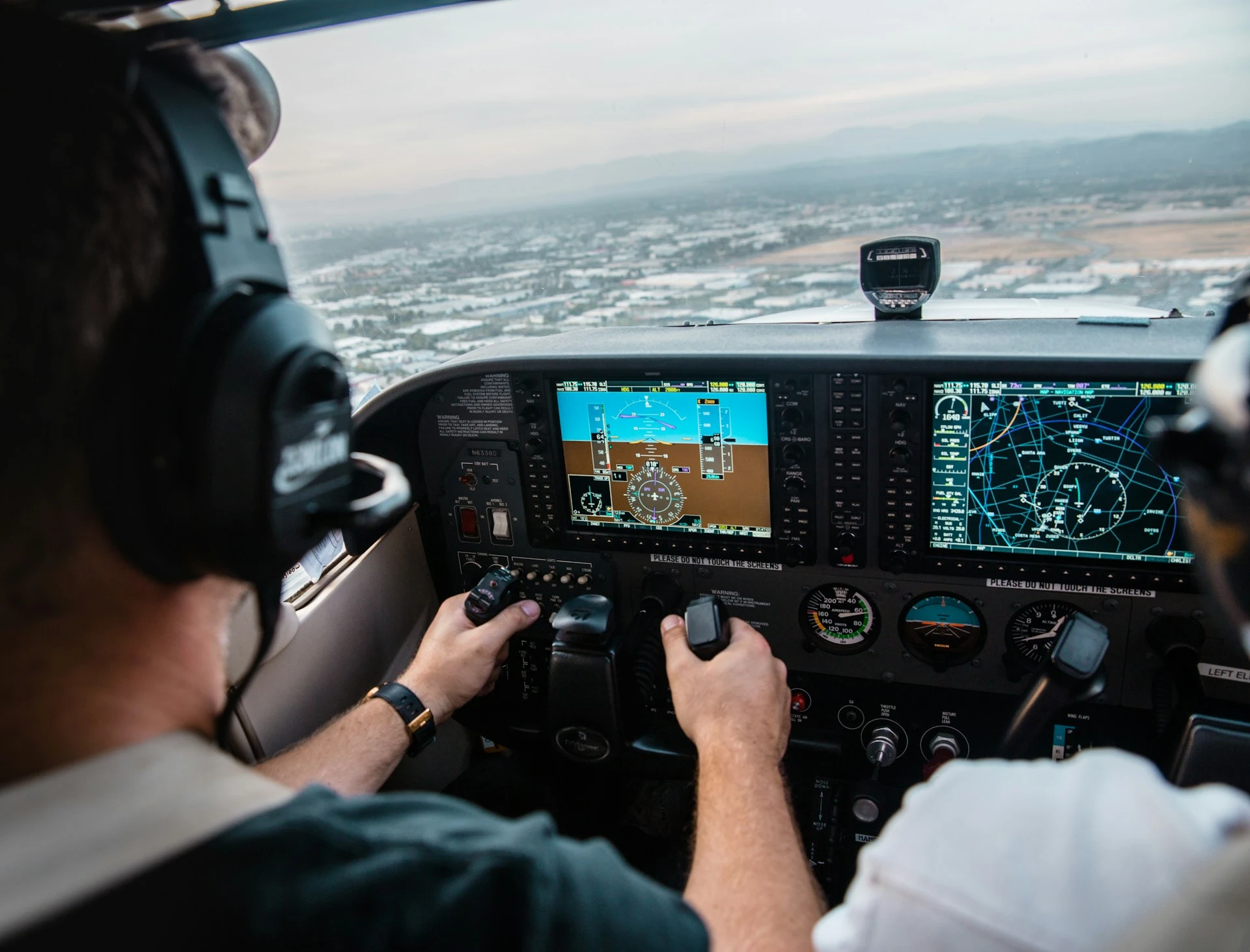
Your first week focuses on orientation and building comfort in the aircraft. You’ll review safety procedures, complete preflight inspections, and learn basic aircraft controls. Most students take the controls during their very first lesson, gaining hands-on experience while learning how the aircraft responds to control inputs.
Week 2: Building Fundamental Skills
During the second week, lessons begin to focus on core maneuvers such as straight-and-level flight, climbs, descents, and turns. You’ll also start developing situational awareness and learning how to divide attention between the aircraft, the environment, and instructor guidance.
Week 3: Introducing Takeoffs, Landings, and Radio Work
By the third week, students are typically working more intensively on takeoffs and landings, often the most challenging and rewarding part of early training. You’ll also gain increased exposure to radio communication, learning how to interact confidently with air traffic control and make standard traffic pattern calls.
Week 4: Confidence, Consistency, and Progress
As the first month comes to a close, many students notice a significant increase in confidence. Aircraft handling becomes more natural, checklists feel familiar, and lessons begin to flow smoothly. This is the stage where students start seeing themselves as pilots, not just beginners.
Ground School: Learning Beyond the Cockpit
Alongside flight lessons, ground training plays a critical role in your first 30 days. You’ll study aerodynamics, weather, regulations, and flight planning, connecting classroom knowledge directly to what you experience in the air. Early progress in ground school sets the stage for success on the FAA written exam.
What Success Looks Like After 30 Days
By the end of your first month, success isn’t measured by perfection, it’s measured by progress. You’ll understand aircraft systems, feel comfortable in the cockpit, and have a clear sense of your training path ahead. These early wins build momentum for upcoming milestones like solo flight and cross-country training.
Take the Next Step
If you’re ready to begin your Private Pilot License training, Blue Skies Above is here to guide you every step of the way. Schedule a discovery flight today and experience what your first 30 days as a student pilot could look like. The journey starts with a single takeoff.