Pay-As-You-Go vs Financing Your Private Pilot Training in 2026
Published by:
Matthew Bourguignon
Published on:
Updated on:
Read time:
7 min read
You have picked your airplane, your instructor, and a start date. Then the practical question lands before the first preflight: how will you pay for this, one lesson at a time, in one purchase, or in monthly steps? Searching for how to pay for private pilot training turns up strong opinions and very few side-by-side answers.
Here is ours. At Blue Skies Above you can pay by the hour, buy a package, or fund a package through financing. None of these is cheaper or better for everyone, because the right one is the one that keeps you flying on a steady schedule. This guide compares them on cash flow, price certainty, and risk so you can choose with your eyes open.
Three ways to pay, side by side
Before the details, here is the whole comparison in one table. The financing column describes a funded package, since that is where our financing figures apply.
| Pay by the hour | Package | Package with financing | |
|---|---|---|---|
| How it works | You pay for the time you actually fly | A price set in advance for the Private Pilot Certificate hours | The same package, paid through a lender in monthly steps |
| Commitment up front | As small as one lesson | The full package price | A loan agreement for qualified applicants |
| Price certainty | Your total follows the hours you fly | Built on 65 hours (Full Program) or 40 hours (FAA minimums) | Package price plus interest |
| Monthly cash flow | Moves with how often you fly | One large payment | A fixed monthly step |
| Main risk | A total you cannot see in advance | Hours beyond the package are billed for the time you fly | Interest, and a payment that starts before you finish |
| Best fit | Flexible schedules and flexible budgets | Students who want a clear plan and price | Students who cannot or prefer not to pay a lump sum |
You can see the package details on our pricing page, and our full cost breakdown shows what sits inside each one.
Pay as you go keeps your commitment as small as one lesson
We have no minimum billing, so when you pay by the hour you pay for the time you actually fly. You never buy a block of hours you have to burn through. If your month gets crowded and you fly less, your bill gets smaller with you.
A student with an irregular work schedule, or one who wants to test the training before committing a large sum, can start with a lesson and see how it feels. Our Discovery Flight is a natural first step for that kind of start.
The other side of the meter is that the total stays open. Every hour you fly adds to the bill, and the FAA puts the national average for private pilot completion at around 75 hours, well above the 40-hour minimum. When you pay hour by hour, you carry that uncertainty one invoice at a time. Our guide to how billing works explains the three meters, and we share our current hourly rates when you contact us.
A package gives you a price before the first preflight
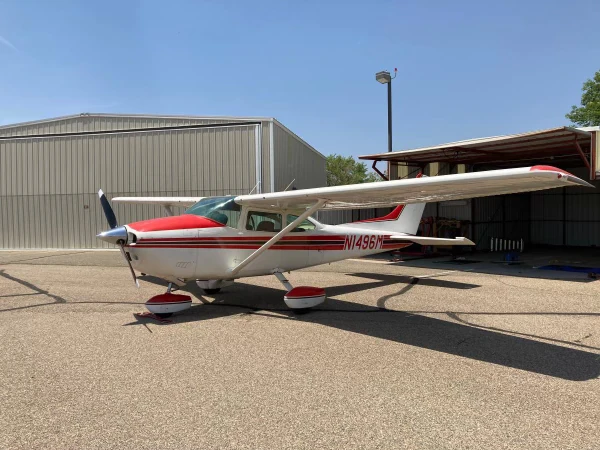
Our Full Program is $21,575, built on a realistic 65-hour syllabus in a Cessna 172N, with 50 hours of flight instruction and 30 hours of ground instruction. Our FAA-minimums package is $12,775, built on the 40-hour legal floor. The first one assumes the way most students actually train. The second assumes you finish at the minimum, which most students do not.
A package works like a fare set before takeoff. You know the shape of the plan, about 13 weeks across 26 lessons at three a week for the Full Program, and you know the price you are working toward. If you like a plan you can point to, that clarity has real value.
A package does not freeze your total forever. If you need hours beyond it, those extra hours are billed for the time you fly, the same way hourly billing works. A package also asks for a bigger commitment at the start, and our seven costs outside your package shows what else belongs in your budget.

Financing turns one big bill into monthly steps
If a lump sum is the obstacle, financing is the bridge. Our financing partners are Stratus Financial and Flight Training Finance, and terms and rates vary by lender and by applicant.
The two partners work differently. Stratus Financial lets you apply with a co-borrower from the start, and it offers a 12-month payment deferment option for qualified applicants. With Flight Training Finance, repayment starts right away and the loan grows with each lesson, since payments to the school follow your training. Our financing page puts both side by side, and our Stratus Financial page covers that lender in detail.
Financing keeps cash in your account and keeps lessons on the calendar. Interest means you repay more than you borrow, and the monthly figure is where the conversation starts. Your own terms come from the lender. Our deeper guide to financing flight school covers the lender side.
Where each path can trip you up
Every payment path has a way of going wrong, so here is each one.
Pay as you go can trip you with drift. When the bill arrives lesson by lesson, it is easy to space lessons out to spread the cost. Long gaps usually mean review time when you return, which is why we recommend flying two to three times a week. A plan that quietly slows your schedule can add review hours.
A package can trip you with the lump sum. Paying a large amount at once can drain the savings you wanted to keep for the medical exam, the knowledge test, and the checkride. Our guide to lowering your private pilot cost covers how to plan those steps early.
Financing can trip you with the monthly payment. A loan payment is a fixed obligation, and it keeps arriving whether or not your lessons run smoothly. If weather or work slows your flying, the payment does not slow down with it. Borrow a figure you could carry through a slow month.
Which student each path fits
Picture three students at Lanett Municipal Airport, all headed for the same private pilot certificate.
The first works rotating shifts and cannot promise the same week twice. Paying by the hour fits her, because the bill follows the flying and no block of hours sits waiting. She watches her totals more closely and accepts that the final number stays open.
The second has a steady schedule and savings set aside for training. He wants one number to plan around, so a package fits him. He picks the Full Program because it is built on the hours most students actually fly, and he knows a few extra hours may still come.
The third has the schedule and the drive but not the lump sum. Financing fits her, as long as the monthly step is one she can carry comfortably. She keeps flying three times a week, and the steady rhythm is exactly what protects her total.
Each of them chose well. Totals cannot be compared fairly without the same hours, the same aircraft, and the same terms, so the path to pick is the one you can sustain from the first lesson to the checkride.
Four questions that settle the decision
Run your own situation through these four questions, in order.
- Can I fly two to three times a week? If yes, any path can work. If not, paying by the hour adapts to a lighter schedule, though training stretches out with it.
- Do I want one price to plan around? A package gives you that. If a changing total would keep you up at night, lean toward it.
- Can I pay a large amount now without touching my safety margin? If not, financing is worth a look. Check the monthly step against your slowest month.
- Do I want to try before I commit? A Discovery Flight and a few hourly lessons let you learn how training feels before you decide on a bigger plan.
If your answers point in different directions, that is normal. Plenty of students end up choosing based on which risk they would rather manage: an open total, a large payment, or a monthly obligation.
Frequently asked questions about paying for private pilot training
- Can I pay by the hour instead of buying a package? Yes. You can train and pay by the hour, and we have no minimum billing, so you pay for the time you actually fly. See our pricing page for the packages.
- Is financing cheaper than paying as you go? We cannot call one cheaper, because the totals depend on your hours, your terms, and your schedule. Interest means you repay more than you borrow, while financing can keep your lessons on a steady rhythm.
- Who offers your financing? Our financing partners are Stratus Financial and Flight Training Finance. Financing options may be available to qualified applicants.
- What happens if I need more hours than my package? Hours beyond the package are billed for the time you fly. Our guide on how to lower your private pilot cost shows how steady lessons help.
- Where should I start? Start with a Discovery Flight to feel what training is like, then contact us and we will talk through a payment path that fits your plan.
Talk through your payment plan with us
Each path asks something different of you: an open total, a larger start, or a monthly step with interest. Matching one to your real schedule and budget is the last step. Contact us and we will share our current hourly rates and walk you through the payment path that fits your plan at Blue Skies Above.